Mental Health Blog : Therapy Tips, Coping Tools, and Resources in Fort Worth, TX
Table of Contents
(MOST RECENT TO OLDEST)
Why You Might Feel Worse Before You Feel Better in Therapy
10 Ways to Celebrate Samhain as a Practice of Reflection
You Don’t Have to Earn Rest Before You Take It
8 Things to Let Go of Before a New Season Begins
How to Tell if You’re People-Pleasing vs. Being Kind
12 Coping Skills That Don't Involve "Just Think Positive"
8 Small Rituals That Help You Feel More Present
What “Survival Mode” Really Means and How to Know If You’re In It
Queer Resources in Fort Worth and Nationwide: Support for LGBTQIA+ and BIPOC Communities (Updated)
Why Do I Feel Responsible for Everyone Else’s Emotions?
10 Small Habits That Support Emotional Healing
How Long Does Therapy Take to “Work”?
How Do I Find the Right Therapist for Me?
What Happens in a First Therapy Session? (What to Expect)
8 Ways Perfectionism Functions as a Form of Self-Protection
Are You Anxious or Were You Just Never Allowed to Rest?
5 Things Self-Love is Not (According to a Trauma Therapist)
Therapy vs. Self-Help: Knowing When You Need More Support
Using the Winter Solstice as a Trauma-Informed Reset
Holiday Boundaries for People Who Were Never Allowed to Have Them
How to Build Belonging in a Disconnected World
How to Work With (Not Against) Your Inner Critic
Fort Worth Community Resources: Local Organizations Offering Safety, Advocacy, and Legal Help
Boundaries: They're More Than Just Saying No
How EMDR Can Help Make Distressing Memories Less Intrusive
The Loneliness of Being the First One to Break a Cycle
Why I Do This Work: A Therapist Reflects on Healing and Hope in Uncertain Times
Queer Resources in Fort Worth and Nationwide: Support for LGBTQIA+ and BIPOC Communities
Queer-Affirming Therapy: What It Is and Why It Matters
Mental Health Awareness Isn’t Just For May: How to Keep Caring for Yourself Year-Round
Can I Benefit From Trauma Therapy If I Don’t Remember Anything “Bad” Happening?
Your Privacy Matters: Why I Opt Out of Insurance Panels as a Private Pay Mental Health Therapist
Why Do I Keep Choosing Emotionally Unavailable Partners?
Many people eventually notice a painful pattern in their dating lives. Different people, but somehow it all feels the same. You may find yourself asking things like: "Why do I keep falling for people who can't commit?", "Why am I always chasing someone who won't choose me?", or even "Is there something wrong with me?"
The answer is usually more complicated and nuanced than simply having bad luck. The people we feel drawn to are often shaped by our nervous systems, attachment experiences, and what we've learned about love over time. The good news is that patterns can change and so can taste and standards..
What Does It Mean to Be Emotionally Unavailable?
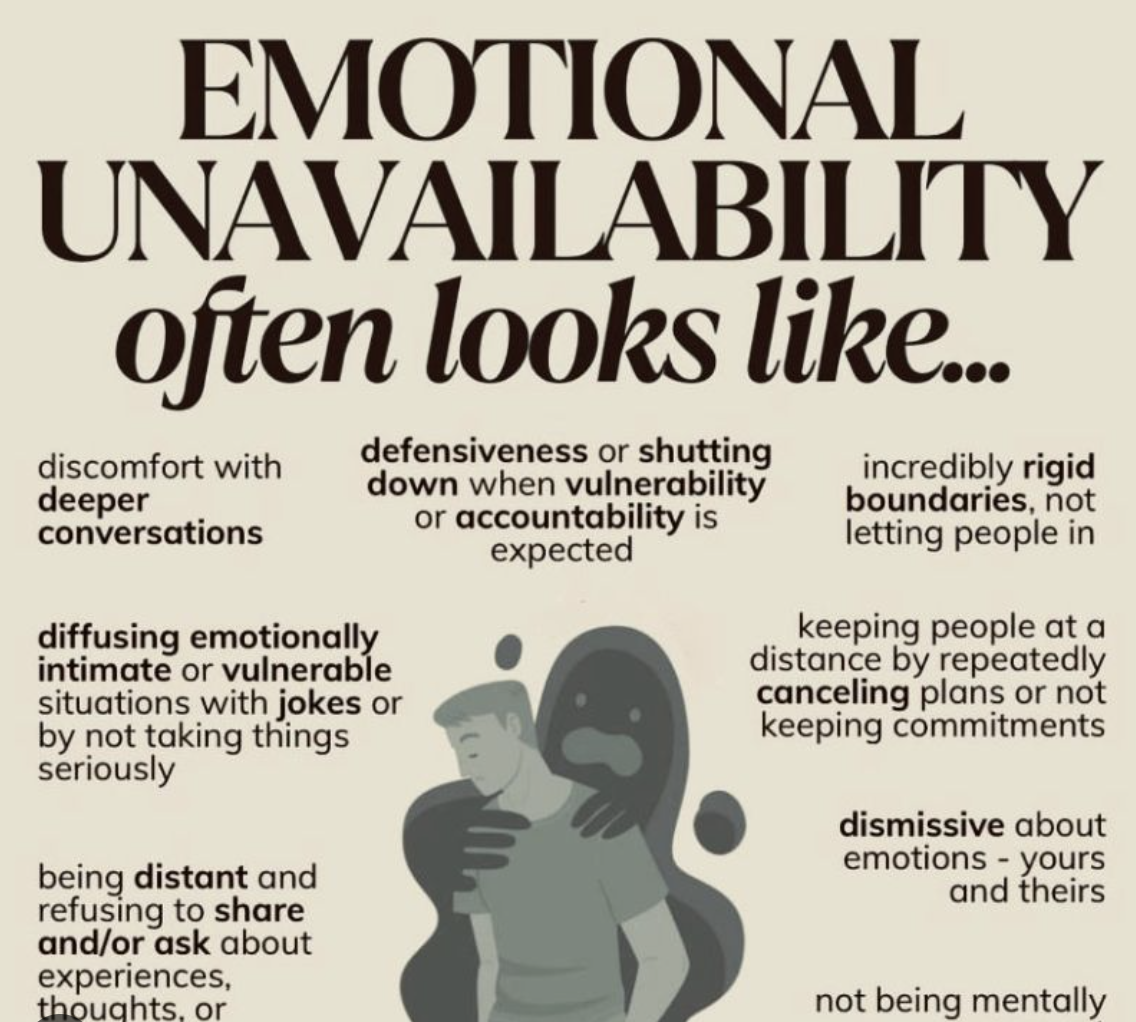
Emotionally unavailable is a defense mechanism that manifests with avoidance because vulnerability and emotionality feels unsafe. It’s not always intentional or malicious as many people who are emotionally unavailable have their own unresolved wounds to heal. It can look different depending on the person, but here are some common signs:
Difficulty expressing emotions
Avoiding vulnerability
Fear of commitment
Inconsistent communication
Pulling away when relationships become serious
Keeping partners at arm's length
Prioritizing independence over connection
Being physically present but emotionally distant
Why Does This Pattern Keep Happening?
I don’t believe attraction at its core is random, although it absolutely can be in some cases. Our brains often confuse familiarity with safety and likeness. This is where our childhood relationships can become the blueprint for future relationships.
Attachment theory explains how the bond and closeness that we have with our primary caregivers can shape our emotional and relational patterns throughout our lives. The shaping continues with adolescent relationships and early adulthood relationships that can be significant. Caregivers and early partners who were inconsistent, unavailable, unpredictable, or emotionally mature can transform a secure attachment pattern that is innate within us all to an insecure, anxious, and/or avoidant attachment pattern with ourselves and others. This can lead us to earn love as a conditional thing instead of inherently thinking that we receive it by existing with our loved ones. This can feel like:
Having to be "good enough"
Walking on eggshells
Feeling responsible for others' emotions
Another way that our formative years can shape how we think about chemistry is by mistaking anxiety for chemistry because that is what certain people are used to. Healthy relationships can feel slow, calm, and predictable, which can feel boring and unsafe to people with anxious, insecure, or avoidant attachment patterns. Whereas emotionally unavailable people may create high highs, low lows, intensity, and constant uncertainty, which can feel like a thrill, safety, and something that is familiar based on people’s families of origin. Our nervous system may interpret this intensity as passion when it's actually emotional activation.
Sometimes we unconsciously seek relationships that resemble earlier pain because part of us hopes this time we'll finally receive the love we didn't get before as a way of solving the unsolvable. It’s often an attempt at healing through familiarity instead of reparative experiences with pattern-breaking.
It Doesn't Mean You're Broken If the Pattern Repeats
I’ve had to break this pattern in my early adulthood years and this experience is far too common. Patterns develop for understandable reasons and attraction is influenced by lived experiences, but awareness of these things create opportunity for change.
Signs You're Beginning to Break the Pattern
Here are some signs that you’re beginning to break or interrupt the pattern:
Paying attention to consistency instead of intensity
Paying attention to behaviors instead of just words
Feeling less attracted to emotional rollercoasters
Choosing curiosity over chasing
Choosing security of yourself and self-validation over external validation
Setting boundaries earlier
Walking away when your needs aren't met
Feeling safe instead of constantly anxious
Allowing relationships to develop slowly
Leaving relationships when they no longer serve you and still being okay
How Therapy Can Help
Therapy can help you understand your own attachment patterns, help heal relational trauma, build self-trust, regulate emotions tied to nervous system dysregulation, develop healthier relationship expectations, and learn to implement secure attachment patterns. This all can be done with reparative experiences, trauma reprocessing with EMDR, IFS, somatic therapy, and attachment-focused therapy, and being in a foundationally safe relationship with your therapist.
Healing doesn't necessarily change who you're attracted to overnight, but it can change who you choose, what you tolerate, and what begins to feel like love. Healthy love often feels more unclimactic than chaos, but over time it becomes far more secure, reciprocal, and fulfilling.
Sam Villarreal, MS, LPC, LCDC