Mental Health Blog : Therapy Tips, Coping Tools, and Resources in Fort Worth, TX
Table of Contents
(MOST RECENT TO OLDEST)
10 Ways to Celebrate Samhain as a Practice of Reflection
You Don’t Have to Earn Rest Before You Take It
8 Things to Let Go of Before a New Season Begins
How to Tell if You’re People-Pleasing vs. Being Kind
12 Coping Skills That Don't Involve "Just Think Positive"
8 Small Rituals That Help You Feel More Present
What “Survival Mode” Really Means and How to Know If You’re In It
Queer Resources in Fort Worth and Nationwide: Support for LGBTQIA+ and BIPOC Communities (Updated)
Why Do I Feel Responsible for Everyone Else’s Emotions?
10 Small Habits That Support Emotional Healing
How Long Does Therapy Take to “Work”?
How Do I Find the Right Therapist for Me?
What Happens in a First Therapy Session? (What to Expect)
8 Ways Perfectionism Functions as a Form of Self-Protection
Are You Anxious or Were You Just Never Allowed to Rest?
5 Things Self-Love is Not (According to a Trauma Therapist)
Therapy vs. Self-Help: Knowing When You Need More Support
Using the Winter Solstice as a Trauma-Informed Reset
Holiday Boundaries for People Who Were Never Allowed to Have Them
How to Build Belonging in a Disconnected World
How to Work With (Not Against) Your Inner Critic
Fort Worth Community Resources: Local Organizations Offering Safety, Advocacy, and Legal Help
Boundaries: They're More Than Just Saying No
How EMDR Can Help Make Distressing Memories Less Intrusive
The Loneliness of Being the First One to Break a Cycle
Why I Do This Work: A Therapist Reflects on Healing and Hope in Uncertain Times
Queer Resources in Fort Worth and Nationwide: Support for LGBTQIA+ and BIPOC Communities
Queer-Affirming Therapy: What It Is and Why It Matters
Mental Health Awareness Isn’t Just For May: How to Keep Caring for Yourself Year-Round
Can I Benefit From Trauma Therapy If I Don’t Remember Anything “Bad” Happening?
Your Privacy Matters: Why I Opt Out of Insurance Panels as a Private Pay Mental Health Therapist

Holiday Boundaries for People Who Were Never Allowed to Have Them
If you grew up in a family where boundaries were foreign, the holidays can feel extra tense. Old wounds can flare up, guilt becomes the main feeling, and suddenly you’re doing things you swore you were done with like overly pleasing people and feeling responsible for other people’s emotions. Here are some simple ways to navigate holiday gatherings when you’re still learning that the word “no” doesn’t make you a bad person.
Notice the patterns you automatically fall back into when around family and pick one pattern to interrupt. Just one interruption is enough.
Like saying yes before you even check in with yourself
Feeling emotionally responsible for everyone else
Making yourself smaller to avoid conflict
Compensating for childhood power dynamics
Set one single boundary, not 10. Start small and start with what matters most to you.
“I can come, but I’m leaving at 8 pm.”
“I’m not talking about whether or not I’ll have kids.”
“I won’t be drinking this year and I’m not open to discuss it.”
Expect discomfort when feelings of guilt and tension arise. It doesn’t mean you made the wrong decision, it just means that historically you’ve been the “easy one” and you’re disrupting the default dynamics.
Their discomfort does not mean you need to reverse the boundary you set
Your anxiety does not mean you’re doing something wrong
Default dynamics will try to pull you back in, so anticipate it, but don’t enable it
Have a backup plan for when you need to step away to ground yourself
Let a friend know that if you message them during this date around this time that you are in need of their support to help with grounding
Step outside to re-regulate
Take a longer bathroom break and sit on the ground to breathe
Reassure yourself by acknowledging the guilt and that you’re taking care of yourself in this way
Practice authenticity and honesty, but in a simple and clear way.
“I won’t be able to make it this year, but hopefully next year.”
“I’m not discussing that right now.”
Aftercare, aftercare, aftercare! Boundary-setting is hard so take time to review and reward yourself afterward.
What went better than I expected?
Where did I sell myself short?
What do I want to keep practicing?
What does my body need from me right now?
If you end up trying some of these, just know that building internal safety takes time and practice makes progress.
Sam Villarreal, MS, LPC, LCDC
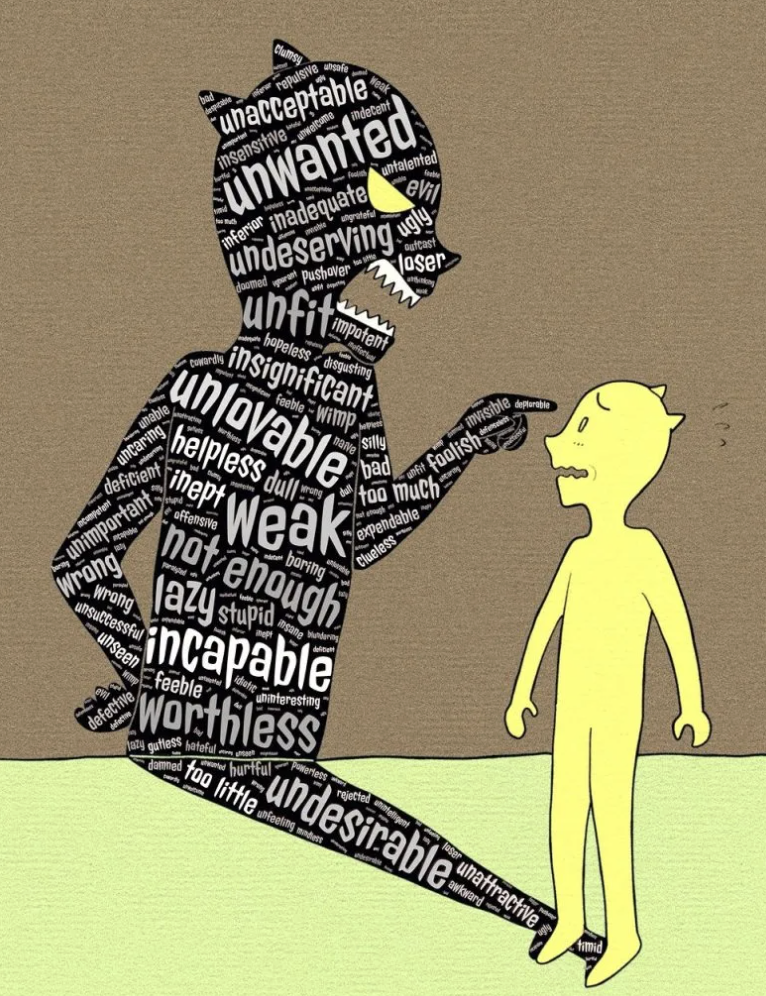
How to Work With (Not Against) Your Inner Critic
If you’re in therapy (or thinking about starting), you probably already know that one of the loudest internal voices we wrestle with is the inner critic.
It’s the part of you that says:
“You’re not trying hard enough.”
“You’ll just embarrass yourself if you speak up.”
“No one likes you”
Clients often tell me their inner critic feels relentless, like it’s either in the driver’s seat or yelling in their ear nonstop. That can be exhausting, and it makes sense you’d want to get rid of it altogether, but here’s the thing: the critic isn’t the enemy. Your inner critic is a part of you that, at some point, learned to protect you, even if its methods are harsh.
Step 1: Understand What the Critic Wants
The inner critic didn’t appear out of nowhere. It usually develops as a survival mechanism, helping you to avoid mistakes, rejection, and/or danger by becoming an untrained security guard: overbearing, anxious, and not very nuanced. In therapy, I often ask clients to pause and consider: “What is this part of you trying to do for you?” Instead of “How do I make this voice shut up?”.
For example:
The critic says, “Don’t speak up in this meeting.”
Underneath, it’s really saying, “I want to keep you safe from rejection or judgment.”
That reframe can take the sting out so instead of just hearing the attack, you begin to see the protection behind why this part does what it does..
Step 2: Separate the Critic from the Whole Self
A critical thought can feel like the truth, but it’s not your entire identity. It’s one part of you. Just one piece of the beautifully complex whole that makes you, you. You can acknowledge its commentary without agreeing with it.
I often suggest using language like, “A part of me believes I’m not good enough,” instead of, “I’m not good enough.” That small shift creates distance to help you see the critic as just one perspective at the table, not the only voice.
Step 3: Bring in Other Parts of You
In session, we might explore what other parts are available. Maybe the compassionate part. Maybe the wise, grounded part. Maybe even the playful part.
You can try asking yourself:
What would I say to a close friend if they had this thought?
What would the most loving part of me say to this?
How would I respond if a younger version of me felt this way?
This isn’t about silencing or dismissing the critic, it’s about having multiple perspectives at the table, like the parts of you that are supportive and compassionate. By widening the conversation, you reduce the inner critic from hogging the mic.
Step 4: Shift the Relationship, Not Just the Thought
A lot of clients are surprised when I tell them: the goal isn’t to erase the inner critic. The harder you try to silence the inner critic, the louder it often gets. Once you treat this part with respect, curiosity, and maybe even gratitude then it softens and there is more room to have a dialogue. Imagine these parts as inner people, we wouldn’t want to ignore a physical person, that usually is hurtful and counterproductive to building trust and knowing why they acted the way they did.
Instead, try acknowledging it:
“I hear you. You’re worried about me failing.”
“Thanks for trying to protect me, but I want to try this anyway.”
You’re not agreeing, you’re accepting and communicating with your inner critic; just like you would with a physical person when you want to further the relationship after a rupture. You’re letting the critic know you hear its concern, but you’re choosing to lead with a different part of yourself.
Step 5: Practice in Small Moments
Therapy is where we can practice together, but your everyday life is where the real change happens. Don’t wait until the next big job interview to experiment with this, we need to build trust with our inner parts in order to begin to change what they’ve been so used to doing. Start with something small and manageable as to not overwhelm you or your parts:
When you make a small mistake and feel inner criticism rise up.
When you hesitate to send a text, practice responding internally to this part of you.
When you’re learning something new, catch the commentary.
Every time you notice, pause, and respond differently, you’re building new neural pathways in your brain. This neurologically strengthens your ability to lead with compassion and understanding rather than fear since we often fear what we don’t understand. Over time, the critic can soften and become more of an inner coach where it offers opinions in a supportive way, but ultimately you feel more in charge.
Closing Thought
Your inner critic may always be there, but it doesn’t have to run the show. In therapy, we can work on transforming it from a relentless judger into a cautious advisor you listen to without obeying.
Healing doesn’t mean eliminating parts of yourself. It means learning to work with them in a way that honors both your need for safety and your capacity for growth. It's integrating and befriending all of the parts of ourselves because as Carl Rogers said “the curious paradox is that when I accept myself just as I am, then I can change”. If you struggle with understanding and befriending your inner critic, I’m here to help you get there using IFS/parts work therapy. Schedule a free 15-minute consultation today.
👉 Question for readers: When was the last time your inner critic spoke up, and how did you respond?