Mental Health Blog : Therapy Tips, Coping Tools, and Resources in Fort Worth, TX
Table of Contents
(MOST RECENT TO OLDEST)
10 Ways to Celebrate Samhain as a Practice of Reflection
You Don’t Have to Earn Rest Before You Take It
8 Things to Let Go of Before a New Season Begins
How to Tell if You’re People-Pleasing vs. Being Kind
12 Coping Skills That Don't Involve "Just Think Positive"
8 Small Rituals That Help You Feel More Present
What “Survival Mode” Really Means and How to Know If You’re In It
Queer Resources in Fort Worth and Nationwide: Support for LGBTQIA+ and BIPOC Communities (Updated)
Why Do I Feel Responsible for Everyone Else’s Emotions?
10 Small Habits That Support Emotional Healing
How Long Does Therapy Take to “Work”?
How Do I Find the Right Therapist for Me?
What Happens in a First Therapy Session? (What to Expect)
8 Ways Perfectionism Functions as a Form of Self-Protection
Are You Anxious or Were You Just Never Allowed to Rest?
5 Things Self-Love is Not (According to a Trauma Therapist)
Therapy vs. Self-Help: Knowing When You Need More Support
Using the Winter Solstice as a Trauma-Informed Reset
Holiday Boundaries for People Who Were Never Allowed to Have Them
How to Build Belonging in a Disconnected World
How to Work With (Not Against) Your Inner Critic
Fort Worth Community Resources: Local Organizations Offering Safety, Advocacy, and Legal Help
Boundaries: They're More Than Just Saying No
How EMDR Can Help Make Distressing Memories Less Intrusive
The Loneliness of Being the First One to Break a Cycle
Why I Do This Work: A Therapist Reflects on Healing and Hope in Uncertain Times
Queer Resources in Fort Worth and Nationwide: Support for LGBTQIA+ and BIPOC Communities
Queer-Affirming Therapy: What It Is and Why It Matters
Mental Health Awareness Isn’t Just For May: How to Keep Caring for Yourself Year-Round
Can I Benefit From Trauma Therapy If I Don’t Remember Anything “Bad” Happening?
Your Privacy Matters: Why I Opt Out of Insurance Panels as a Private Pay Mental Health Therapist

Why Do I Feel Responsible for Everyone Else’s Emotions?
Have you ever left a conversation replaying every word, trying to figure out whether someone is upset with you? Do you find yourself checking in on people’s moods, suppressing or softening your needs, avoiding conflict, or rushing to fix tension the moment it appears? Maybe someone seems distant and your nervous system immediately goes into overdrive thinking: Did I do something wrong? Are they mad at me? Do I need to fix this?
If this sounds familiar, you’re not alone. Many people move through relationships carrying an invisible sense of emotional responsibility for everyone around them. They feel accountable for keeping others comfortable, happy, calm, or emotionally regulated even at the expense of their own needs and wellbeing. While this can look like kindness or empathy from the outside, internally it often feels exhausting and is more similar to people pleasing tendencies. The good news is that this pattern usually develops for a reason as it’s often a survival skill and not a personality flaw.
What Does It Mean to Feel Responsible for Other People’s Emotions?
There’s a difference between caring about someone’s feelings and feeling responsible for managing them. For example:
Healthy empathy sounds like:
“I care that you’re hurting.”
“I want to support you.”
“Your feelings matter to me.”
Emotional over-responsibility sounds more like:
“It’s my job to make sure you’re okay.”
“If you’re upset, I’ve failed.”
“I can’t relax until this tension is gone.”
“Your emotions are now my problem to solve.”
People who carry this pattern often become highly attuned to emotional shifts in others. They notice tone changes, facial expressions, silence, or tension almost instantly. Their nervous system is constantly scanning for signs that something might be wrong, leaving them feeling on edge and more emotionally tired after being around certain people. This can show up in:
Romantic relationships
Friendships
Family dynamics
Parenting
Work environments
Even casual social interactions
You may find yourself over-explaining, apologizing excessively, avoiding boundaries, or trying to prevent anyone from feeling disappointed. At its core, emotional over-responsibility is often rooted in fear.
Where Does Emotional Over-Responsibility Come From?
Growing Up Around Emotional Unpredictability
For many people, this pattern begins in childhood. If you grew up around caregivers who were emotionally volatile, critical, emotionally unavailable, explosive, or unpredictable, your nervous system may have learned that monitoring other people’s emotions was necessary for safety and a way to feel more in control in an uncontrollable environment by being on top of your caregivers emotions and needs. If a caregiver’s mood determined whether the environment felt emotionally safe, you may have learned to:
Read the room constantly
Anticipate emotional shifts
Prevent conflict before it escalated
Become “easy,” agreeable, or emotionally low-maintenance
What started as survival can continue long into adulthood, even in relationships where that level of hypervigilance is no longer necessary.
Parentification
Some children are subtly or overtly placed into caregiving roles far too early whether it be because there needed to be another parent to younger children or because caregivers acted as irresponsible themselves. Maybe you became:
The mediator
The therapist friend of the family
The “mature one”
The emotional caretaker for a parent
The child who learned not to have needs because everyone else’s needs felt bigger
When children are rewarded for emotional caretaking, they often grow into adults who feel deeply uncomfortable allowing other people to manage their own feelings. This can become an identity role for them that they are the “parent” of the friend group, that they suffer in silence but are always there for others, or are just always “okay”.
Trauma and the Fawn Response
When people think of trauma responses, they often think of fight, flight, or freeze. Many people can develop a fourth response: fawning aka people pleasing. Fawning involves prioritizing appeasement and emotional harmony in order to stay safe, accepted, or connected. This can look like:
Chronic people-pleasing
Difficulty saying no
Not knowing your own needs
Overidentifying your needs with the needs of those around you
Fear of disappointing others
Automatically prioritizing others’ comfort over your own
Over time, your nervous system may begin equating emotional harmony with safety itself.
Cultural and Social Conditioning
Some people are also taught (directly or indirectly) that their worth comes from being accommodating, self-sacrificing, nurturing, or emotionally available at all times. Basically their self-worth comes from how they can serve others, not about who they are individually as human beings. This is especially common among:
Women
Oldest siblings
Caretaking roles
Trauma survivors
Highly sensitive people
Helping professionals
Being caring is not the problem. The problem is when caring becomes priority over your own well-being.
Signs You May Be Carrying Emotional Responsibility That Isn’t Yours
You might struggle with emotional over-responsibility if:
You apologize constantly, even when unnecessary
Conflict feels unbearable or unsafe
Someone else’s bad mood immediately affects your nervous system
You feel guilty setting boundaries which hinders your ability to
You over-explain your decisions to avoid disappointing people
You feel pressure to fix, soothe, or rescue others
You struggle to identify your own needs
You absorb emotional tension like a sponge
Someone being upset with you feels catastrophic
You feel responsible for preventing discomfort in others
Many people don’t realize how much energy this takes until they begin stepping out of the pattern. Constantly managing everyone else’s emotions is exhausting.
How This Pattern Impacts Mental Health and Relationships
Emotional over-responsibility often creates chronic anxiety. This is when your nervous system is always scanning for emotional danger so true rest becomes difficult. You may become hypervigilant in relationships, constantly trying to predict reactions, prevent conflict, or maintain emotional stability for everyone around you, which just ends up suppressing your own wants, needs, and personality. Over time, this can lead to:
Burnout
Anxiety
Emotional exhaustion
Resentment
Loss of identity
Difficulty accessing your own emotions and needs
It can also impact relationships in painful ways. Ironically, people who over-function emotionally often attract relationships where emotional labor becomes uneven. You may become the fixer, the stabilizer, the caretaker, or the “safe” person everyone leans on while feeling unseen and untended to yourself. Since your focus is often on managing other people’s experiences, authenticity can become difficult. You may start shaping yourself around what keeps others comfortable rather than what feels true to you, therefore losing your personality and identity that makes you, you.
You Are Not Responsible for Managing Everyone’s Emotional Experience
Hear me when I say (or rather type) that other adults are responsible for their own emotions. It is no one else’s responsibility. That does not mean you stop caring or become cold, detached, or selfish. It means you are beginning to recognize the difference between:
Compassion and self-abandonment
Support and emotional caretaking
Empathy and emotional fusion or codependency
Someone else feeling disappointed does not automatically mean you’ve done something wrong. Someone being uncomfortable with your boundary does not mean your boundary is harmful. Allowing people to experience their emotions is not cruelty, it’s part of healthy relational functioning. You can care deeply about people without carrying their emotional weight on your shoulders.
How to Start Letting Go of Emotional Over-Responsibility
Start Noticing the Pattern
Awareness comes before change. Pay attention to moments where you immediately:
Rush to fix
Panic over someone’s mood
Over-explain
Apologize reflexively
Abandon your needs to reduce tension
Instead of judging yourself, try becoming curious. Your nervous system likely learned this pattern for a reason so self-compassion can go a long way.
Pause Before Taking Ownership
When someone is upset, pause and ask yourself:
“Did they actually ask me to fix this?”
“Am I assuming responsibility that hasn’t been given to me?”
“What emotion am I feeling right now?”
“What would happen if I allowed them to have their own experience?”
“Do I need space away from them to understand what I’m feeling?”
This pause can help interrupt automatic patterns.
Practice Tolerating Discomfort
One of the hardest parts of healing this pattern is learning that discomfort is not the same thing as danger. Healthy boundaries can feel deeply uncomfortable at first, especially if your nervous system associates harmony with safety. People may feel disappointed sometimes and they may not always understand your choices so you may feel guilt when you begin changing old patterns. That discomfort does not necessarily mean you’re doing something wrong, it might mean you’re doing something right by growing your tolerance to tolerate discomfort..
Reconnect With Yourself
Many people who are highly focused on others lose touch with themselves over time. You can begin to reconnect with yourself by asking yourself:
What do I need?
What do I want?
What emotions belong to me right now?
What happens when I stop organizing myself around other people’s reactions?
Consider Therapy
These patterns can run deep, especially when rooted in trauma, parentification, attachment wounds, or chronic emotional invalidation. Therapy can help you:
Understand where these patterns came from
Build healthier boundaries
Reduce hypervigilance
Learn emotional differentiation
Reconnect with your own needs and identity
Approaches like EMDR, IFS, somatic therapy, and attachment-focused work can be especially helpful for addressing the nervous system patterns underneath emotional over-responsibility.
If you feel responsible for everyone else’s emotions, there’s a good chance you learned early on that emotional monitoring helped you stay safe, connected, or valued. The survival skill makes sense, but it is not sustainable. Healing is not about becoming less caring. It’s about learning that relationships do not require self-abandonment in order to occur. Just know that you are allowed to have boundaries. You are allowed to disappoint people sometimes. You are allowed to exist without constantly managing the emotional atmosphere around you. And you are allowed to learn that someone else’s feelings are not always yours to carry.
Sam Villarreal, MS, LPC, LCDC

5 Things Self-Love is Not (According to a Trauma Therapist)
Happy February, it’s love month! During this month, we often think of partnered love, but let’s focus on self-love for once. And no it isn’t just taking yourself on solo dates, although that is empowering, it goes a little deeper than that. Be prepared to feel a little called out (with all the love)! Here are 5 things self-love is not, according to me, a trauma therapist.
1. Self-love is not constant positivity aka toxic positivity.
You don’t need to be grateful all the time. You don’t need to compare your pain to others and look at the bright side. Feeling all the emotions like anger, grief, jealousy, sadness, or numbness doesn’t mean anything bad, it means you're a human being. Forcing positivity can increase feelings of shame and emotional suppression and that is the opposite of self-love. Self-love allows for all emotions to be expressed without judgement.
2. Self-love is not people pleasing or self-sacrificing.
Saying yes to keep the peace even when your body and internal thoughts are screaming at you to say no is not kindness. It’s more self-harm in order to be agreeable or palatable to others. Consistently ignoring your needs is a trauma response not being selfless. True self-love includes boundaries, even if it’s uncomfortable.
3. Self-love is not fixing yourself to be more “acceptable”.
Healing out loud is empowering. Healing is becoming the version of yourself that may look different for others, but better for yourself. It’s not about becoming quieter or more convenient for others. It all starts with self-acceptance.
4. Self-love is not avoiding or suppressing pain.
Skipping over anger and grief to get to forgiveness and gratitude can delay the process of healing altogether which can keep trauma further stuck in the body. Allow yourself to feel what you feel in the moment you feel it at the pace that your body is capable of.
5. Self-love is not aesthetic or doing things for performance.
It’s not bubble baths, dining alone, ideal photo ops, or perfectly curated wellness routines especially if those things are used to avoid the things we aren’t willing to accept yet. While these things are supportive, they are not substitutes for rest, boundaries, in-depth trauma work, emotional honesty, or nervous system regulation. If self-care starts to feel like an obligation or something you just check off your list, it’s time to sit down and reassess.
Self-love is often quieter, messier, and less public-friendly, but it’s also more honest, real, and more sustainable.
Sam Villarreal, MS, LPC, LCDC
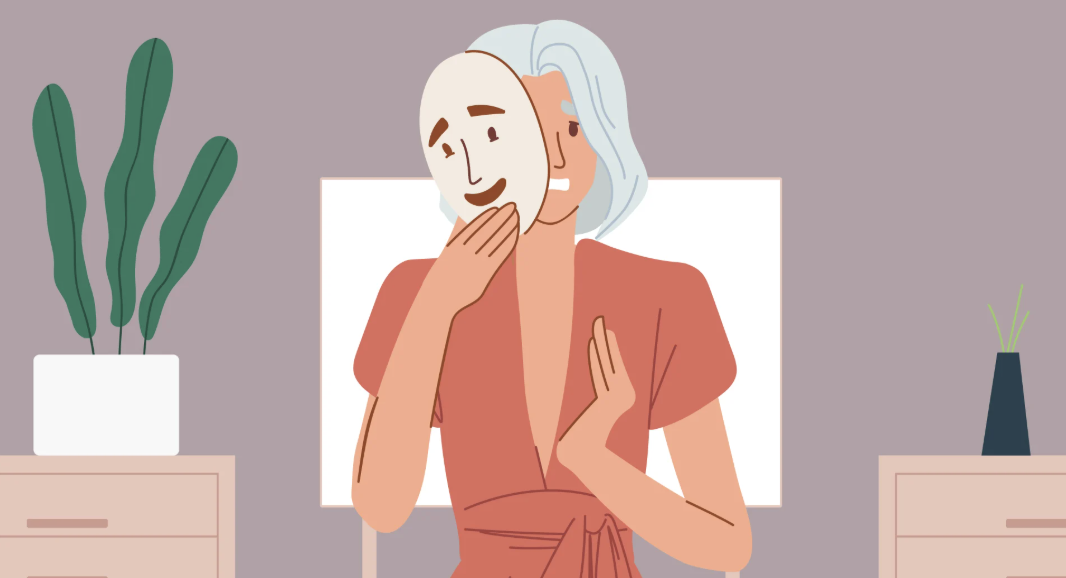
What is Masking?
For many people, especially those who identify as neurodivergent or anyone who might have needed to adapt quickly know that masking is a survival skill. Masking involves camouflaging, suppressing, or hiding parts of yourself like your emotions, needs, and personality in order to fit in and feel safer when around others. On the outside, it can look like calm and confidence, but on the inside it can be deeply uncomfortable, exhausting, and inauthentic.
What Masking Can Look Like in Adults
Masking is often invisible to those on the outside, but internally it may be:
Smiling while feeling overwhelmed
Saying “I’m great” when you’re not
Being the responsible one, the helper, the fixer
Downplaying your own needs so you don’t feel like a burden
Performance even when you feel burnt out
Many people who do mask may not identify with the idea of masking or that they were struggling since it’s been their default way of operating around others because there was no other choice if they wanted to feel safe.
Why Masking Develops and Works
Masking often forms in environments where identity and emotional expression is unsafe, unwelcome or unsupported. For example, if crying was met in a home with anger or “you better stop crying or I’ll give you something to cry about” then it was learned that expressing certain emotions meant harm and it becomes an emotional truth instead of an option. Other examples can include:
Growing up with emotionally unavailable caregivers
Hiding natural reactions like stimming because it wasn’t considered “normal”
Having to keep up with social expectations to avoid stigma or discrimination
Learning that love was conditional with how you acted
Living in households where high expectations and conflict shaped how you showed up
Although masking keeps you safe, it still comes at a cost.
The Cost of Masking
Long-term masking can lead to an internal distrust between body and mind which can feel like:
Chronic burnout that doesn’t get better with rest
Anxiety without a clear cause or event
Emotional numbness and/or disconnection from your body’s cues
Feeling unseen even in close relationships leading to withdrawal or isolation
A persistent sense of performing for others
Not knowing who you are, what you want, and what you need for yourself
Unmasking and How To Do It Safely
A common fear is that when you stop masking, everything falls apart, relationships change, you’ll disappoint others, you’ll lose control. While some of those may hold some truths like relationships changing, there are ways to start unmasking slowly and with intention. Unmasking in a supportive way can look like:
Taking an inventory of what your values are, what you don’t like, and what you don’t want
Learning to notice your body’s cues and prioritize those before what anyone else needs or what you may perceive they expect of you
Allowing yourself to rest without justification (I know, this one is gonna be hard)
Naming your needs without over-explaining yourself (needing rest is reason enough)
Letting yourself authentically be seen gradually (for some people, letting yourself be seen authentically by strangers may be easier than letting yourself be seen by loved ones even if they’re safe people because with strangers there are no pre-conceived expectations to how you’ll behave)
This is not about reinventing yourself, but coming back home to the parts of you that have felt neglected.
How Therapy Can Help
Trauma-informed therapy offers a space where masking is not required and all parts of you are welcome. Through approaches like somatic awareness, EMDR, and parts work, clients can explore:
When and why masking developed
When masking started for you
What parts of you learned to stay hidden
How to liberate those parts that were hidden
How to build safety both externally and internally
How to show up more authentically at your own pace
Healing does not require white knuckling, but it does require compassion for all versions of yourself and understanding of why these protective mechanisms were needed in the first place. If this resonates with you and you have more questions or are just curious, contact me here.
Sam Villarreal, MS, LPC, LCDC

Holiday Boundaries for People Who Were Never Allowed to Have Them
If you grew up in a family where boundaries were foreign, the holidays can feel extra tense. Old wounds can flare up, guilt becomes the main feeling, and suddenly you’re doing things you swore you were done with like overly pleasing people and feeling responsible for other people’s emotions. Here are some simple ways to navigate holiday gatherings when you’re still learning that the word “no” doesn’t make you a bad person.
Notice the patterns you automatically fall back into when around family and pick one pattern to interrupt. Just one interruption is enough.
Like saying yes before you even check in with yourself
Feeling emotionally responsible for everyone else
Making yourself smaller to avoid conflict
Compensating for childhood power dynamics
Set one single boundary, not 10. Start small and start with what matters most to you.
“I can come, but I’m leaving at 8 pm.”
“I’m not talking about whether or not I’ll have kids.”
“I won’t be drinking this year and I’m not open to discuss it.”
Expect discomfort when feelings of guilt and tension arise. It doesn’t mean you made the wrong decision, it just means that historically you’ve been the “easy one” and you’re disrupting the default dynamics.
Their discomfort does not mean you need to reverse the boundary you set
Your anxiety does not mean you’re doing something wrong
Default dynamics will try to pull you back in, so anticipate it, but don’t enable it
Have a backup plan for when you need to step away to ground yourself
Let a friend know that if you message them during this date around this time that you are in need of their support to help with grounding
Step outside to re-regulate
Take a longer bathroom break and sit on the ground to breathe
Reassure yourself by acknowledging the guilt and that you’re taking care of yourself in this way
Practice authenticity and honesty, but in a simple and clear way.
“I won’t be able to make it this year, but hopefully next year.”
“I’m not discussing that right now.”
Aftercare, aftercare, aftercare! Boundary-setting is hard so take time to review and reward yourself afterward.
What went better than I expected?
Where did I sell myself short?
What do I want to keep practicing?
What does my body need from me right now?
If you end up trying some of these, just know that building internal safety takes time and practice makes progress.
Sam Villarreal, MS, LPC, LCDC